OBD-II vs Hardwired vs Battery GPS Trackers
There are three main kinds of fleet tracker. This guide compares plug-in, hardwired and battery-powered units in plain terms.
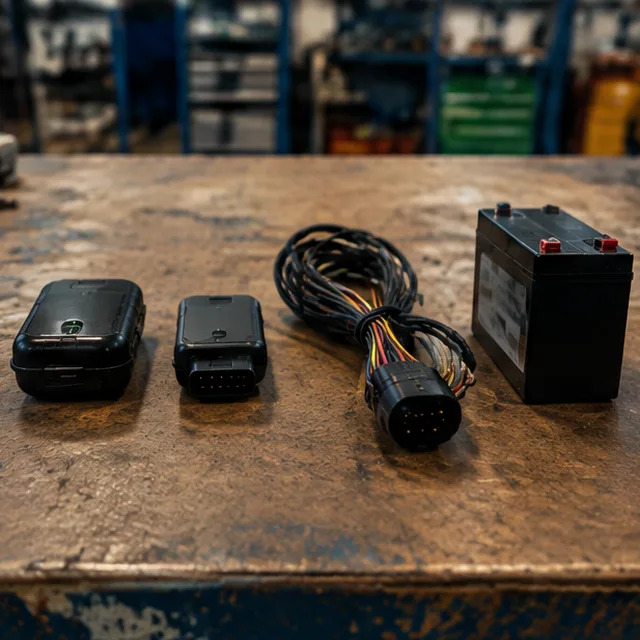
Plug-in trackers
A plug-in tracker goes into the diagnostic port under the dash and takes power from it. It installs in under a minute, moves easily between vehicles and often reads engine data. The trade-off is that it can be unplugged, so an unplug alert is a good idea.
It is the best fit for light vehicles and for fleets that want a quick start.
Hardwired trackers
A hardwired tracker connects to constant power, ignition and ground and hides behind the dash. It is hard to remove, can support inputs such as door sensors and panic buttons and survives heavy-truck conditions. It takes a technician longer to install.
It is the best fit for trucks, buses, equipment and any vehicle where tampering is a risk.
Battery trackers
A battery tracker is a sealed unit with a long-life battery. It needs no wiring, so it can ride on a trailer, a generator or a piece of equipment. Its report schedule trades freshness for battery life, and motion alerts wake it for extra reports.
It is the best fit for assets with no power source.
Mistakes to avoid
- Putting plug-in units on vehicles where theft is a real risk
- Using a battery tracker with a very fast update rate
- Skipping unplug alerts
- Hardwiring light vehicles that move between drivers
OBD-II vs Hardwired vs Battery Trackers: questions
Can I mix tracker types in one fleet?
Yes. One dashboard can show all of them.
Which tracker is hardest to steal?
A hidden hardwired unit with a backup battery is the hardest to defeat.

Put this guide to work
Tell us about your fleet. We reply with a clear next step and a written quote.