OBD-II Plug-In GPS Trackers
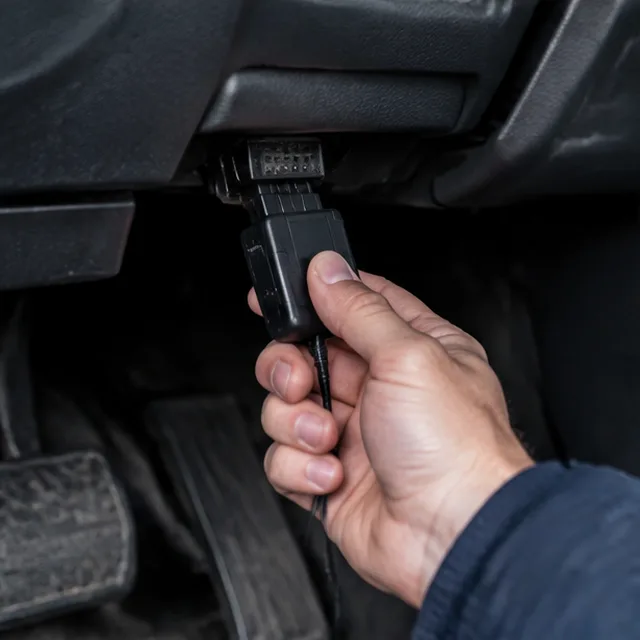
Plug-in trackers go into the diagnostic port under the dash. They are the fastest way to put a vehicle on the map.
What OBD-II Plug-In GPS Trackers covers
Most cars and light trucks built since the mid-1990s have an OBD-II port. A plug-in tracker uses it for power and, on many models, reads engine data such as fuel level and fault codes. It installs in under a minute and moves easily between vehicles.
What you get
- Install in under a minute with no tools
- Reads engine data on many vehicles
- Easy to move between vehicles
- Good for cars, vans and light trucks
How it works
- Check the portWe confirm your vehicles have the port and where it sits.
- Plug inEach tracker is plugged in and checked on the map.
- Add alertsAlerts for unplugging and engine faults are switched on.
Getting the most from OBD-II Plug-In GPS Trackers
OBD-II Plug-In GPS Trackers: common questions
Can a driver unplug it?
It can be unplugged. An alert tells you immediately, and locking covers or hardwired options are available.
Does it work in every vehicle?
It works in most vehicles that have the port. We check yours first.
How do I choose between tracker types?
Plug-in units suit light vehicles, hardwired units suit trucks and equipment, and battery units suit assets with no power. We match the tracker to each vehicle.
Fleet GPS tracking near you

Talk to us about OBD-II Plug-In GPS Trackers
Send the form or call. We reply with a clear next step and a written quote.